1900
1912
1913
1916
1919
-
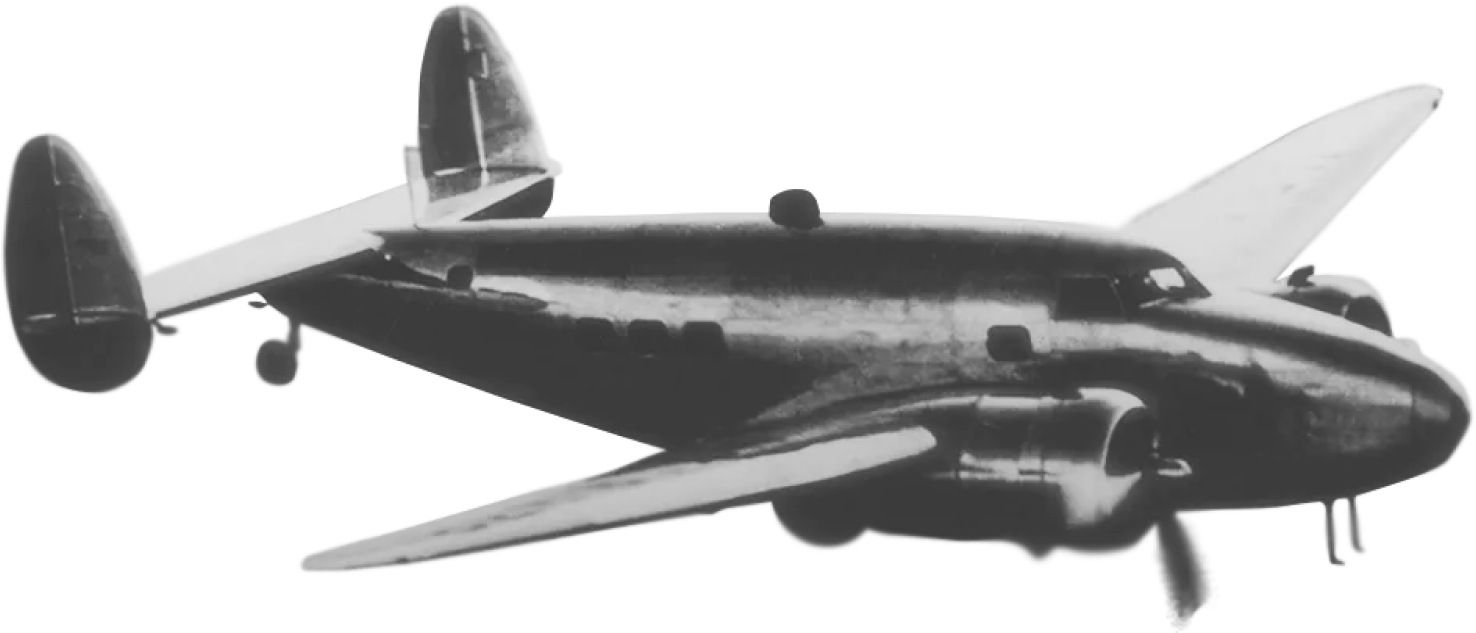
Longines is named the official supplier for the International Aeronautical Federation. Longines develops highly accurate and reliable navigation instruments for use by aviation pioneers, and – through the work of Longines’ US director, John P. V. Heinmuller – times the new records set by these adventurers.
1927
-
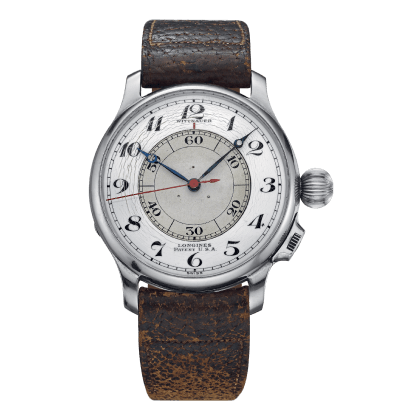
US Navy officer Philip Van Horn Weems develops the ‘Weems System of Navigation’, a series of navigational devices, based on which he and Longines develop a rotating disc watch, enabling the wearer to synchronise the second hand with a GMT signal, essential for navigation: the Longines Weems Second-Setting Watch. A patent for this timekeeper is filed in 1935.
1931
-
Having made his famous non-stop solo flight over the North Atlantic in 1927, pilot Charles A. Lindbergh designs a navigational instrument which he has Longines bring to life. Used in conjunction with a sextant and a nautical almanac, the Lindbergh Hour Angle watch – based on the model Weems created in 1927 – helps aviators calculate longitude which, when combined with their latitude, gives them their exact geographical situation.
1936
1939
-
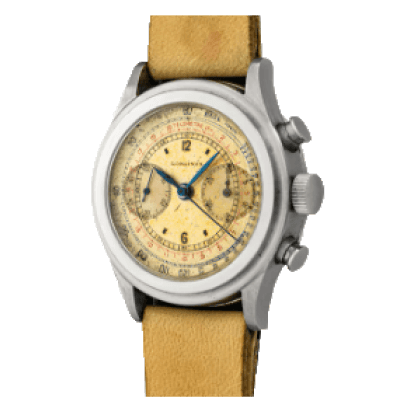
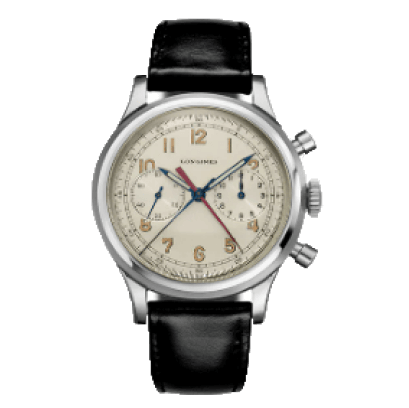
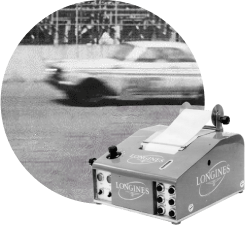
Longines, basing its research on a 24-line calibre, develops mechanical timekeeping equipment, including a chronograph with a semi-instantaneous 30-minute counter and a flyback hand, a semi-instantaneous sports counter with or without flyback hand, and another counter accurate to a hundredth of a second.
-
Longines uses the high-precision 21.29 movement to develop a siderometer. This device gives Greenwich sidereal time expressed in degrees, minutes and fractions of arc minutes, and is used to speed up calculations of position by directly indicating the hour angle of the vernal point in relation to Greenwich.
1945
1947
1954
-
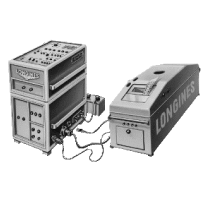
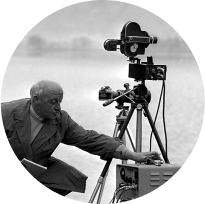
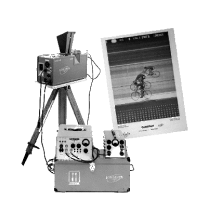
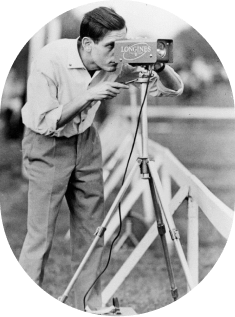
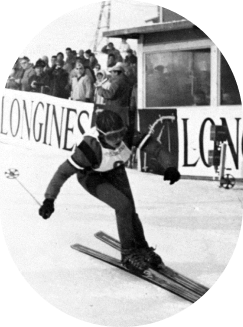
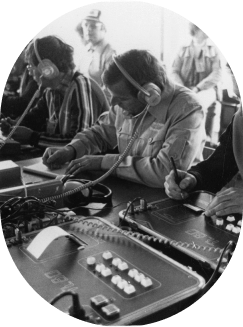
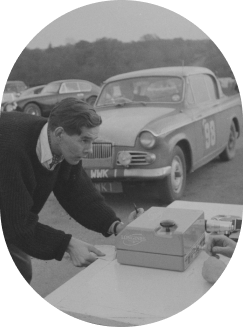
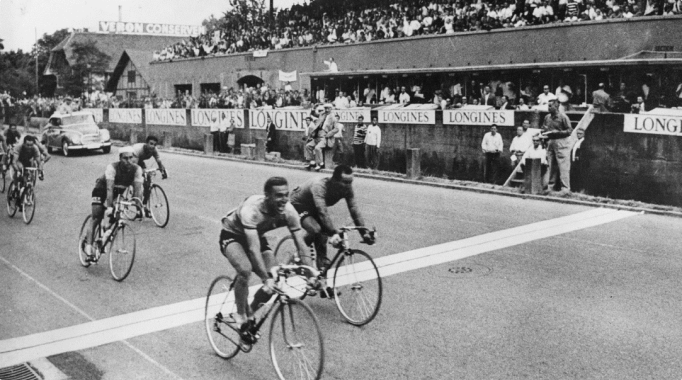
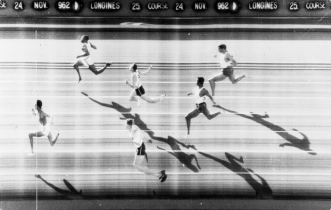
Longines develops its first quartz clock, which will quickly chalk up an impressive new series of records for accuracy at the Neuchâtel Observatory. The timekeeping instrument, Chronocinégines, includes a 16 mm camera attached to a quartz clock. It provides sports officials with a filmed tape showing a series of still images taken every hundredth of a second, allowing them to follow the athletes’ movements as they pass the finishing line.
-
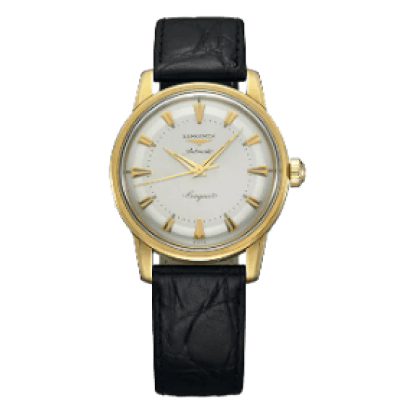
Longines launches its Conquest collection, the first step in a new product development strategy, integrating the concept of a line or family of models.
1957
1959
-
Longines develops a calibre specifically intended for observatory competitions: the 360. The generous size of the rectangular movement houses a large barrel spring and enables the use of a wide sprung balance, oscillating at a frequency of 36,000 vibrations per hour, for even greater accuracy. The 360 calibre sets new records for accuracy in the wristwatch category at the Neuchâtel Observatory.
1963
1964
1965
-
Research conducted by Longines on electronic and quartz technology enable it to develop an electronic quartz movement, the 800 calibre, for on-board chronometers. This time-measuring device opens the way to new heights of accuracy. It easily outstrips the records set by mechanical devices in observatories.
1967
-
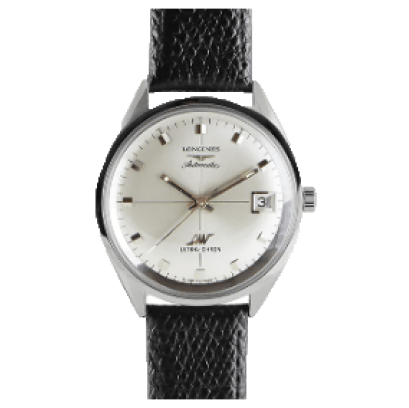
Longines launches a self-winding 11½-line calibre, aiming to offer an alternative to the electronics and quartz used by the competition. The regulating organ of the L430 movement is a guarantee of accuracy, with the characteristics of a competition piece, as it vibrates at a frequency of 36,000 vibrations per hour. The Ultra-Chron collection is based around it.
1969
1972
-
Produced in collaboration with Ebauche SA and Texas Instruments Incorporated, the Longines LCD (Liquid Crystal Display) is the first digital watch created by the brand. It receives the important IR100 award (Annual Industrial Research Conference and Awards).
-
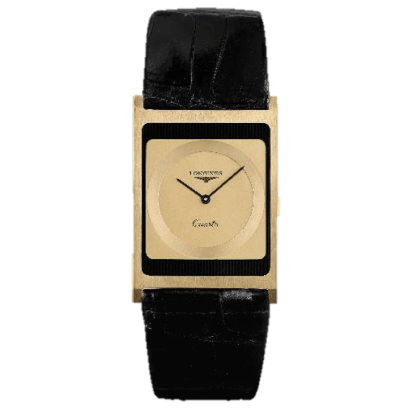
Longines asks artist Serge Manzon to create a line of watches notably different from its classic collections.
The company seeks a talented designer capable of reimagining the wristwatch—capable of transforming a belt buckle into a watch case … The result is a series of soft, pure, and supple forms – sculptures in silver that are both aesthetic and contemporary.
1975
1977
-
The factory develops a mechanical self-winding calibre, the L990, with two barrels placed on the same level. With a height of only 2.95 mm, it is the world’s flattest self-winding movement of its kind. At a time when quartz is dominating the output of many watchmakers, it strengthens Longines’ range of mechanical movements.
1979
1982
-
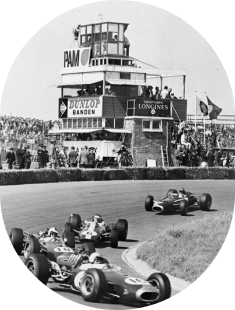
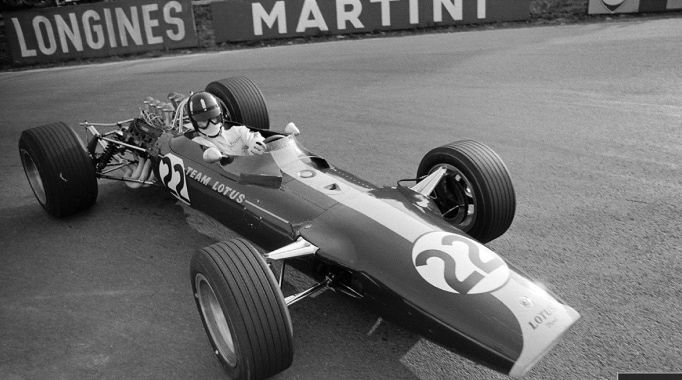
Having signed technical partnerships with the Formula 1 teams of Ferrari and, later, Renault, Longines becomes the official timekeeper for F1 races for a period of 10 years.
-
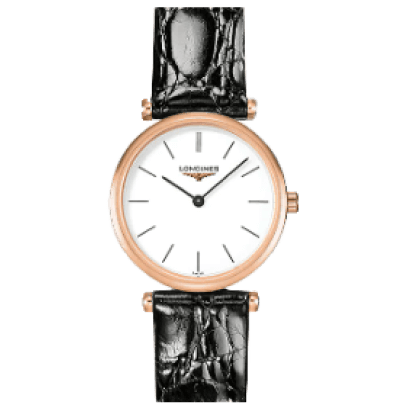
The brand with the winged hourglass logo launches the Agassiz line in 18-carat gold: classic, ultra-thin watches that will lead to the development of Longines’ La Grande Classique, an emblematic collection which proves an immediate and enduring success.
1983
1984
1985
1992
-
To celebrate the 160th anniversary of its existence and 125 years of the use of its brand name and logo, Nicolas G. Hayek, founder and president of Swatch Group, and Walter von Känel, president of Longines, inaugurate the Longines Museum at the company’s headquarters in Saint-Imier, with a gallery retracing the company’s history.